
Why Ephesus Is One of the World's Great Archaeological Sites
Ephesus was once one of the largest and most important cities in the ancient world. Located near the modern town of Selcuk on Turkey's Aegean coast, this remarkably well-preserved archaeological site offers a vivid window into life during the Roman Empire. At its peak in the 1st and 2nd centuries AD, Ephesus was home to an estimated 250,000 people, making it one of the most populous cities in the Mediterranean.
Walking through Ephesus is like stepping into a time machine. The marble streets, grand public buildings, elaborate fountains, and the magnificent Library of Celsus have been carefully excavated and partially restored, giving visitors a tangible sense of the city's former grandeur. Unlike many archaeological sites that require significant imagination to appreciate, Ephesus speaks for itself.
A Brief History of Ephesus
Ephesus has a layered history spanning thousands of years. Founded by Greek colonists in the 10th century BC, the city grew to prominence under Greek and then Roman rule. It served as the capital of the Roman province of Asia and was a major center of trade, religion, and culture.
Key Historical Milestones
- 10th Century BC: Greek settlers from Athens establish Ephesus near the coast.
- 6th Century BC: The Temple of Artemis, one of the Seven Wonders of the Ancient World, is built at Ephesus.
- 129 BC: Ephesus becomes the capital of the Roman province of Asia.
- 1st Century AD: The city reaches its peak population and importance. The Apostle Paul lives and preaches in Ephesus for several years.
- 2nd Century AD: The Library of Celsus and the Great Theatre are built, becoming enduring symbols of the city.
- 5th to 7th Century AD: The harbor silts up, cutting off trade. The city gradually declines.
- 15th Century: Ephesus is abandoned as the coastline recedes further from the city.
- 19th Century onwards: Archaeological excavations begin, revealing the magnificence of the ancient city.
Must-See Highlights at Ephesus
The Library of Celsus
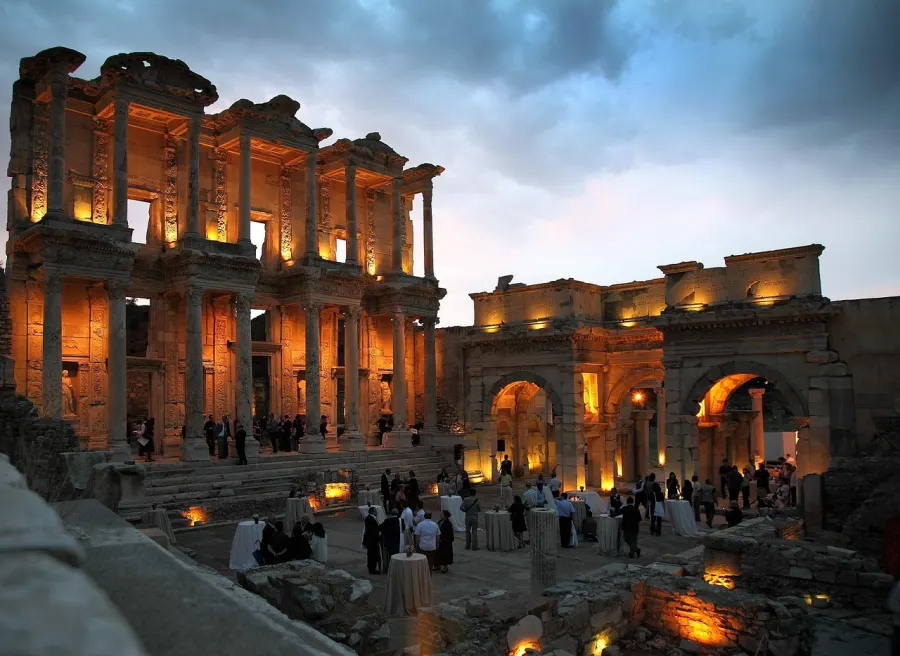
The Library of Celsus is the iconic image of Ephesus and one of the most photographed ancient structures in the world. Built in 117 AD as a monumental tomb for Roman senator Tiberius Julius Celsus, the library once held approximately 12,000 scrolls, making it the third-largest library in the ancient world after Alexandria and Pergamum.
The facade has been beautifully reconstructed, standing two stories tall with ornate Corinthian columns and four statues representing wisdom, knowledge, intelligence, and virtue. The level of architectural detail is extraordinary, and the building is designed to appear larger than it actually is through clever use of perspective. Visit early in the morning when the sun illuminates the facade and the crowds have not yet arrived.
The Great Theatre
Carved into the slope of Mount Panayir, the Great Theatre of Ephesus could seat an estimated 25,000 spectators, making it one of the largest outdoor theatres in the ancient world. It was used for dramatic performances, gladiatorial contests, and public assemblies. According to the Book of Acts in the Bible, the Apostle Paul was confronted here by a mob of silversmiths who feared his preaching would undermine their trade in Artemis statuettes.
The theatre has been partially restored and is occasionally used for modern performances. Standing at the top row and looking down at the stage with the ancient city spreading out behind it is one of the most impressive moments at Ephesus.
The Terrace Houses
While the main ruins are included in the standard admission ticket, the Terrace Houses require a separate ticket (approximately $10 USD). They are absolutely worth the extra cost. These were the luxury homes of Ephesus's wealthy elite, and they contain remarkably preserved mosaic floors, frescoed walls, marble courtyards, and even ancient plumbing systems.
Walking through the Terrace Houses gives you an intimate understanding of how the city's upper class lived nearly 2,000 years ago. The level of preservation is astonishing, with some wall paintings and mosaics looking almost freshly made. Covered walkways with informational panels guide you through the complex.
Curetes Street
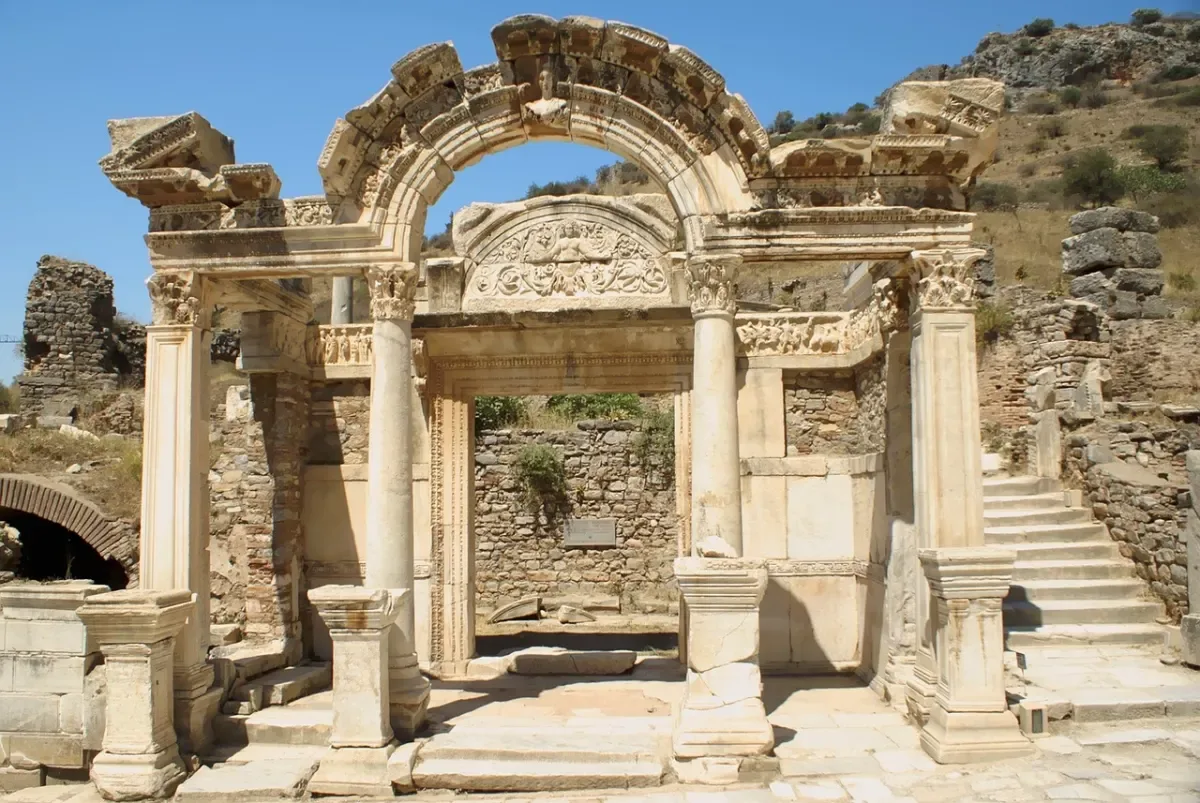
The main thoroughfare of ancient Ephesus, Curetes Street runs from the Hercules Gate down to the Library of Celsus. This marble-paved road was lined with shops, public buildings, fountains, and monuments. Walking down this street, you pass the Temple of Hadrian (with its beautifully carved arch), the public latrines (an fascinating example of ancient communal facilities), and numerous carved reliefs and inscriptions.
The Temple of Artemis
Once one of the Seven Wonders of the Ancient World, the Temple of Artemis was a massive structure four times the size of the Parthenon in Athens. Today, only a single reconstructed column and some foundation stones remain at the site, located about a kilometer from the main ruins. While the ruins are not visually impressive compared to the rest of Ephesus, the historical significance of the site makes it worth a brief visit.
Practical Tips for Visiting Ephesus
Getting There
Ephesus is located near the town of Selcuk, which is well connected by bus and train from Izmir (about 80 km north). From Izmir, you can take a direct bus or train to Selcuk, then a short taxi or dolmus (shared minibus) to the site entrance. If you are arriving by cruise ship at Kusadasi (about 20 km away), taxis and organized tours run regularly to Ephesus.
For the most informative experience, consider booking a guided tour. You can explore guided Ephesus tours that include expert guides who bring the ruins to life with historical context and stories that you would miss on a self-guided visit.
Best Time to Visit
The site is open year-round, but timing your visit well can make a significant difference in your experience.
- Best months: April, May, September, and October offer warm but comfortable temperatures and manageable crowds.
- Summer (June to August): Very hot, with temperatures regularly exceeding 35 degrees Celsius (95 Fahrenheit). If visiting in summer, arrive when the gates open at 8 AM and plan to finish by noon.
- Winter (November to March): Cooler and much less crowded. Some facilities may have limited hours.
- Best time of day: Early morning or late afternoon. The midday hours bring the largest tour groups, especially when cruise ships are in port at Kusadasi.
Tickets and Costs
- General admission: Approximately $15 to $20 USD (prices are set in Turkish Lira and may fluctuate)
- Terrace Houses: Additional $10 USD
- Museum Pass Turkey: If you plan to visit multiple historical sites in Turkey, the Museum Pass can offer significant savings
- Guided tours: $30 to $80 USD depending on group size and inclusions
What to Bring
- Comfortable walking shoes with good grip (the marble surfaces can be slippery)
- Sunscreen, a hat, and sunglasses (there is very little shade on the main walkways)
- At least one liter of water per person (more in summer)
- A camera with a good zoom lens for architectural details
- A guidebook or audio guide for historical context
Beyond Ephesus: Nearby Attractions
Ephesus Archaeological Museum (Selcuk)
Located in the nearby town of Selcuk, this excellent museum houses artifacts found during excavations at Ephesus, including statues, coins, jewelry, and the famous multi-breasted statue of Artemis. Visiting the museum before or after the ruins helps put what you see in context.
Basilica of St. John
Perched on a hilltop in Selcuk overlooking Ephesus, this 6th-century basilica was built by the Byzantine Emperor Justinian over the believed burial site of the Apostle John. The partially restored ruins offer panoramic views of the surrounding area and a peaceful contrast to the busy main site.
House of the Virgin Mary
Located on Mount Koressos about 7 km from Ephesus, this small stone chapel is believed by some to be the final home of the Virgin Mary, brought to the area by the Apostle John. It is recognized as a pilgrimage site by the Catholic Church and is visited by people of all faiths. The site is peaceful and shaded, with natural springs that are said to have healing properties.
Sirince Village
This charming hillside village, about 8 km from Selcuk, is known for its traditional stone houses, fruit wines, and local olive oil. It offers a pleasant escape from the heat and crowds of the archaeological sites. Spend an afternoon browsing the artisan shops, tasting local wines, and enjoying views of the surrounding olive groves and orchards.
Combining Ephesus with a Broader Turkey Itinerary
Ephesus fits naturally into several popular Turkey travel routes:
- Aegean Coast: Combine Ephesus with the ancient sites of Pergamum and Troy, the resort town of Bodrum, and the thermal pools of Pamukkale.
- Istanbul to Ephesus: Fly or take an overnight bus from Istanbul to Izmir, visit Ephesus, then continue south along the Turquoise Coast.
- Cappadocia and Ephesus: Two of Turkey's most popular destinations, easily connected by a short domestic flight.
Final Thoughts
Ephesus is one of those rare places that lives up to the hype. The scale, preservation, and historical significance of the site are genuinely awe-inspiring. Standing on the same marble streets where Roman senators walked, looking up at the Library of Celsus that has stood for nearly two millennia, and imagining the roar of 25,000 spectators in the Great Theatre creates a connection to the ancient world that no textbook or documentary can match. If you are traveling anywhere in Turkey, or even in the broader Mediterranean region, make Ephesus a priority. It is one of the greatest archaeological experiences on the planet.
For expert-led historical tours of Ephesus and surrounding sites, book Ephesus tours on Viator.

Comments (0)
Leave a Comment